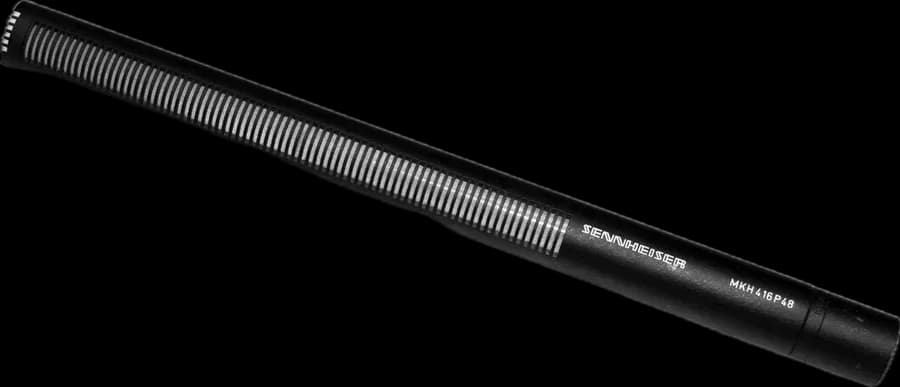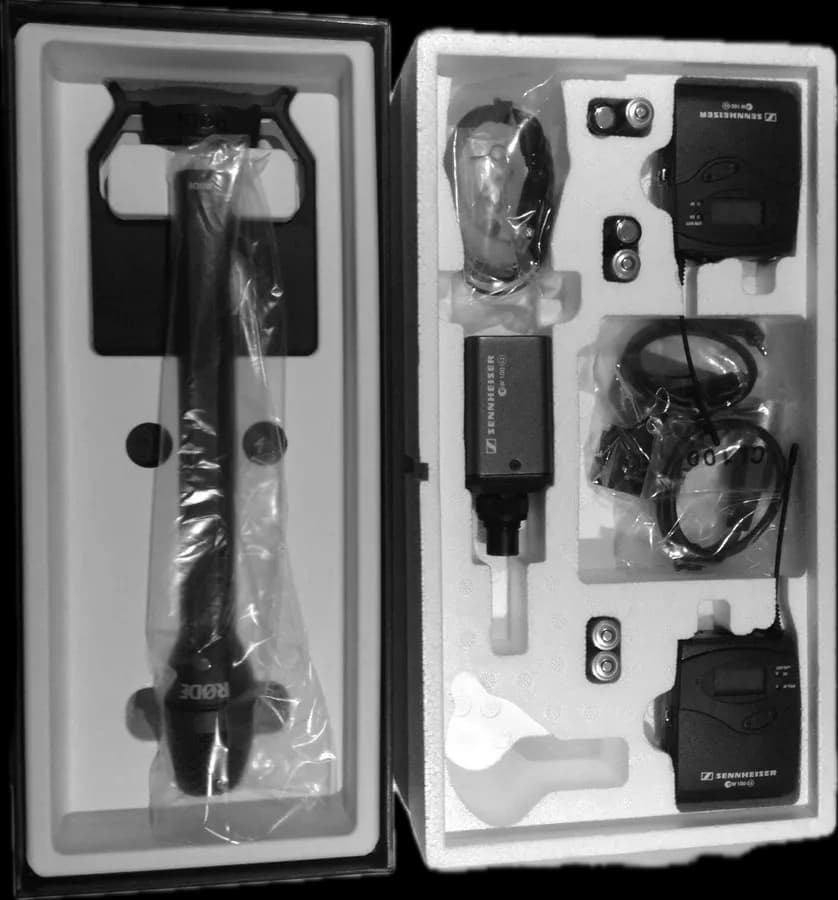
A lavalier is a tiny microphone worn on the body, almost always connected to a wireless transmitter. It solves what the boom can't reach: very wide shots, several people talking far apart, reality shows and documentaries where there's no rehearsal. Its big problem isn't the microphone's quality but what surrounds it: clothing.
Omnidirectional or directional
Most film and television lavaliers are omnidirectional: they pick up equally in all directions, so they forgive the head turning or the microphone ending up slightly off. Directional ones reject more ambience, but demand precise placement and are more sensitive to rustle and breathing. They're reserved for very noisy environments or live stages.
Where to place it
- Center of the chest (sternum): natural voice, good distance, and turning the head to one side or the other has little effect.
- Collar or lapel: closer, but more visible and exposed to rubbing against beards or necklaces.
- Hairline or forehead: widely used in theater and musicals; lots of presence and almost no rustle, but it needs makeup and hair.
- Lower than the chest, the voice loses high frequencies and gains body resonance: it's noticeable.
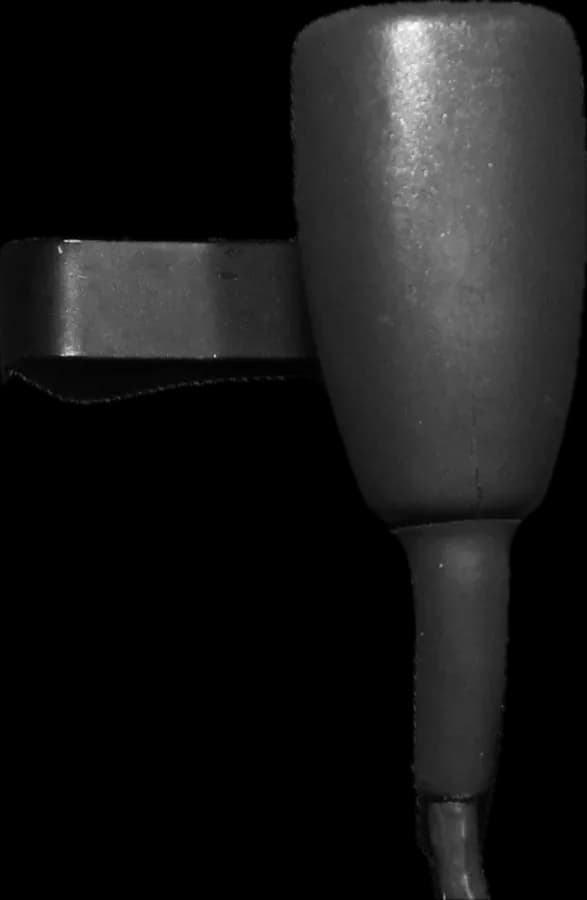
Capsule + clip
Lavalier microphone
The clip is for visible placement; to hide it under clothing you use tape or dedicated mounts.
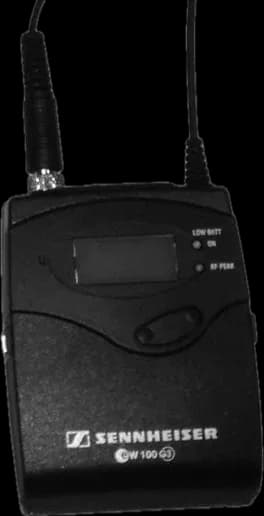
Bodypack
Bodypack transmitter
It receives the lavalier and sends it by radio. It's hidden at the waist, back or thigh depending on wardrobe.
Freely licensed photos with the background removed (adaptations of CC BY-SA photos are shared under the same license). Trademarks belong to their manufacturers; they are mentioned for information only.
Hiding it without rustle
Almost all the noise from a hidden lavalier is rubbing between the capsule, the cable and the fabric. The idea is for the microphone and the fabric to move together, as a single piece.
- Attach the microphone to the fabric, not just to the body: if the fabric moves over the capsule, you'll hear it.
- Use mounts or tape “sandwiches” that wrap the capsule, and medical or skin-specific tape when it goes directly on the body.
- Leave a small strain-relief loop in the cable and tape that down too: tugs on the cable shouldn't reach the microphone.
- Cotton is usually quiet; silk, polyester, leather and windbreakers are noisy. If possible, talk to wardrobe before shooting.
- Watch out for necklaces, zippers and microphones that end up under a crossed arm.
| Symptom | Likely cause | Solution |
|---|---|---|
| Scratching when moving | Fabric rubbing the capsule or cable | Attach it better to the fabric, change position, add a small wind cover |
| Muffled voice | Microphone too low or covered by several layers | Move it up toward the sternum or reduce the layers between the mouth and the capsule |
| Low thumps | Wind or knocks on the chest | Wind cover and high-pass filter; outdoors, a small furry |
| Cuts out mid-take | Sweat or moisture in the connector or capsule | Moisture protection, dry connectors and checks between takes |
Several lavaliers at once
When two people talk close together, each lavalier also picks up the other person's voice with a small delay. If both are summed without control, comb filtering makes it sound hollow. It's solved in the mix, by lowering the channel of whoever isn't speaking, and in editing with the isolated tracks the recorder captures. That's why each lavalier is recorded on its own track.
Sources and recommended reading
Technical documentation from manufacturers and regulators. Links open external sites.
- Lavalier mounting: best practices · RØDE ↗
- Getting good audio with hidden microphones · The Broadcast Bridge ↗
- Top tips for lav mics from a sound expert · RedShark News ↗