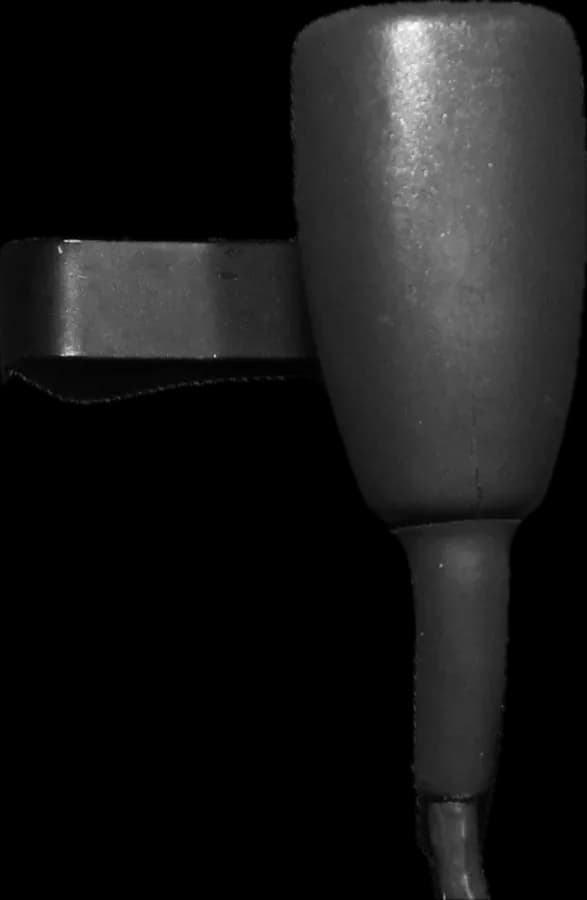
The boom (a microphone on a pole, above or below the frame) is the main source of dialogue on most fiction shoots: it sounds natural, keeps the shot's perspective and doesn't depend on wardrobe. Lavaliers complement it, but rarely replace it entirely.
Polar patterns: what each microphone hears
- Cardioid: mainly rejects what comes from behind. More ambience, less demanding to aim.
- Hypercardioid: narrower at the front, with two rejection zones at about 110° and a small rear lobe. It's the standard for interior dialogue.
- Shotgun: an interference tube makes it very directional, especially in the high frequencies. It's the usual choice outdoors and at greater distances.
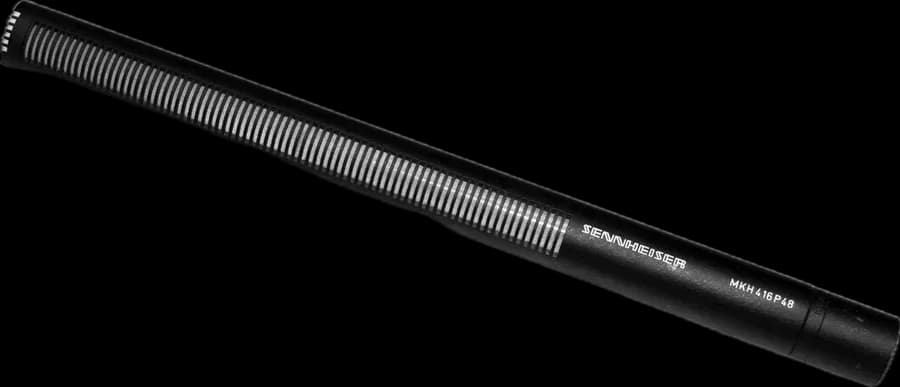
Short shotgun · RF condenser
Sennheiser MKH 416
A film and television classic for decades. Its RF condenser technology makes it very resistant to humidity.
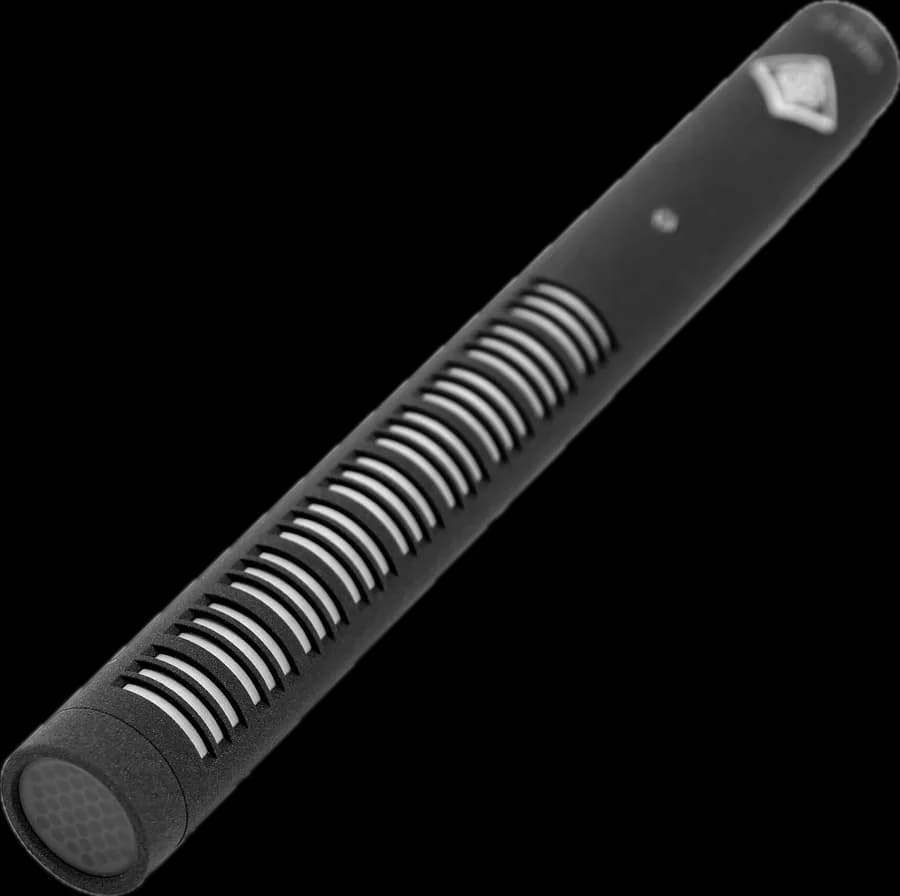
Shotgun · exteriors
Neumann KMR 81
A natural-sounding shotgun widely used outdoors and in documentaries, when the voice must be separated from the ambience.
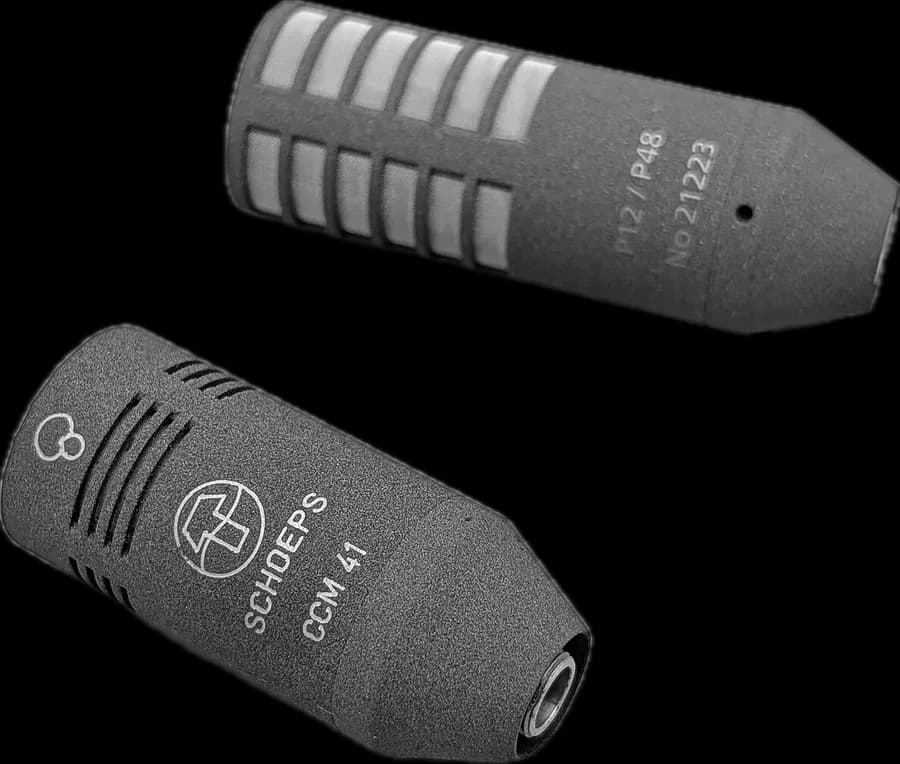
Compact hypercardioid · interiors
Schoeps CCM 41 and CCM 8
The CCM 41 is a reference hypercardioid for interiors; next to it, a figure-8 CCM 8 for M/S.
Freely licensed photos with the background removed (adaptations of CC BY-SA photos are shared under the same license). Trademarks belong to their manufacturers; they are mentioned for information only.
Interiors vs. exteriors
| Situation | Usual microphone | Why |
|---|---|---|
| Reflective interior (house, office) | Hypercardioid | A shotgun picks up wall reflections through its sides and colors them; a hypercardioid sounds more natural in rooms. |
| Exterior | Shotgun | With no walls to reflect, its directionality separates the voice from ambient noise and allows working from farther away. |
| Wide shot, you have to back off | Shotgun | It keeps more presence at a distance; if the shot doesn't allow it, lavaliers back it up. |
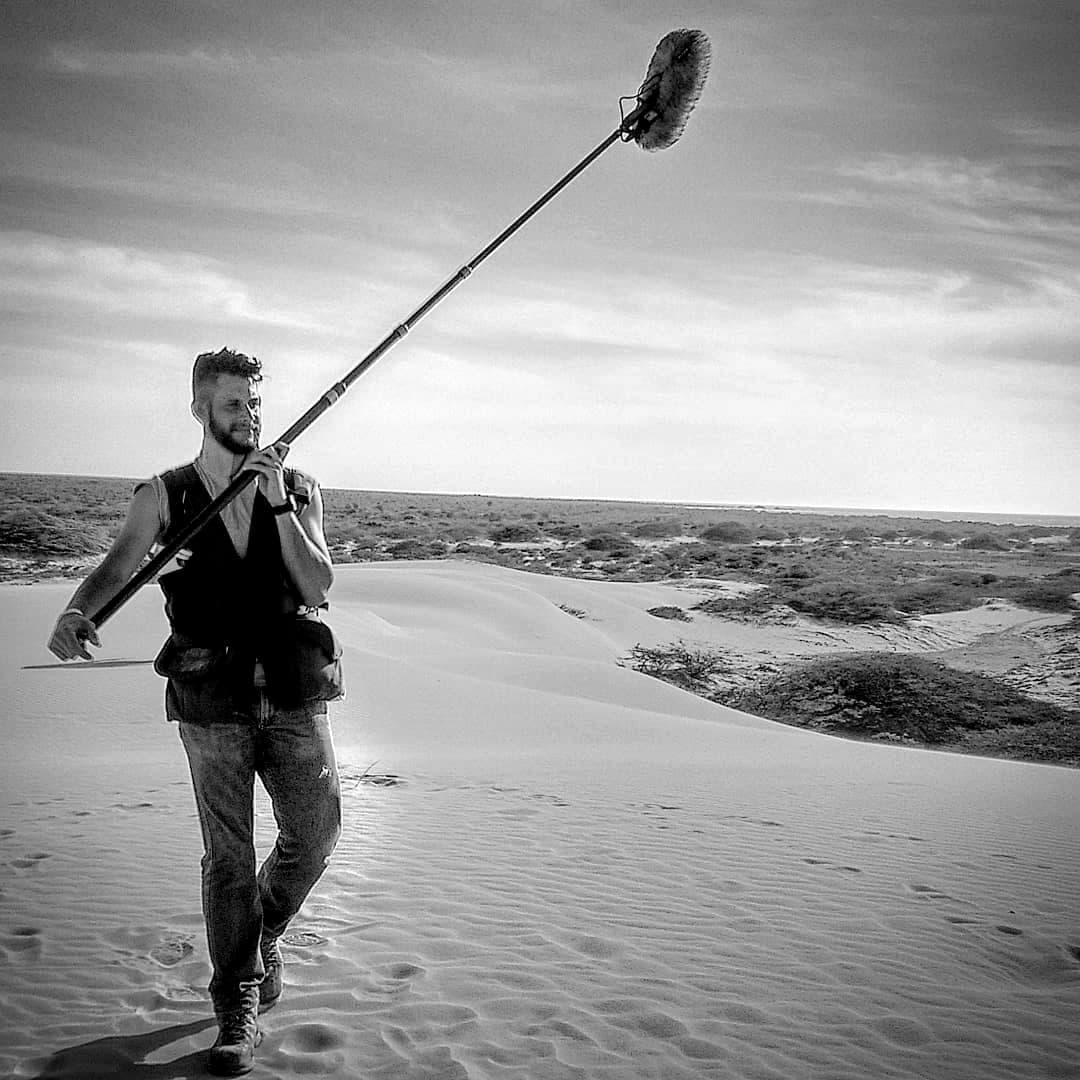
Boom pole technique
- Ask camera for the lens and framing, and find the frame edge with the microphone before rolling.
- Aim at the mouth, not the head or chest. With a hypercardioid, point its rejection zones toward the noise (a generator, the street).
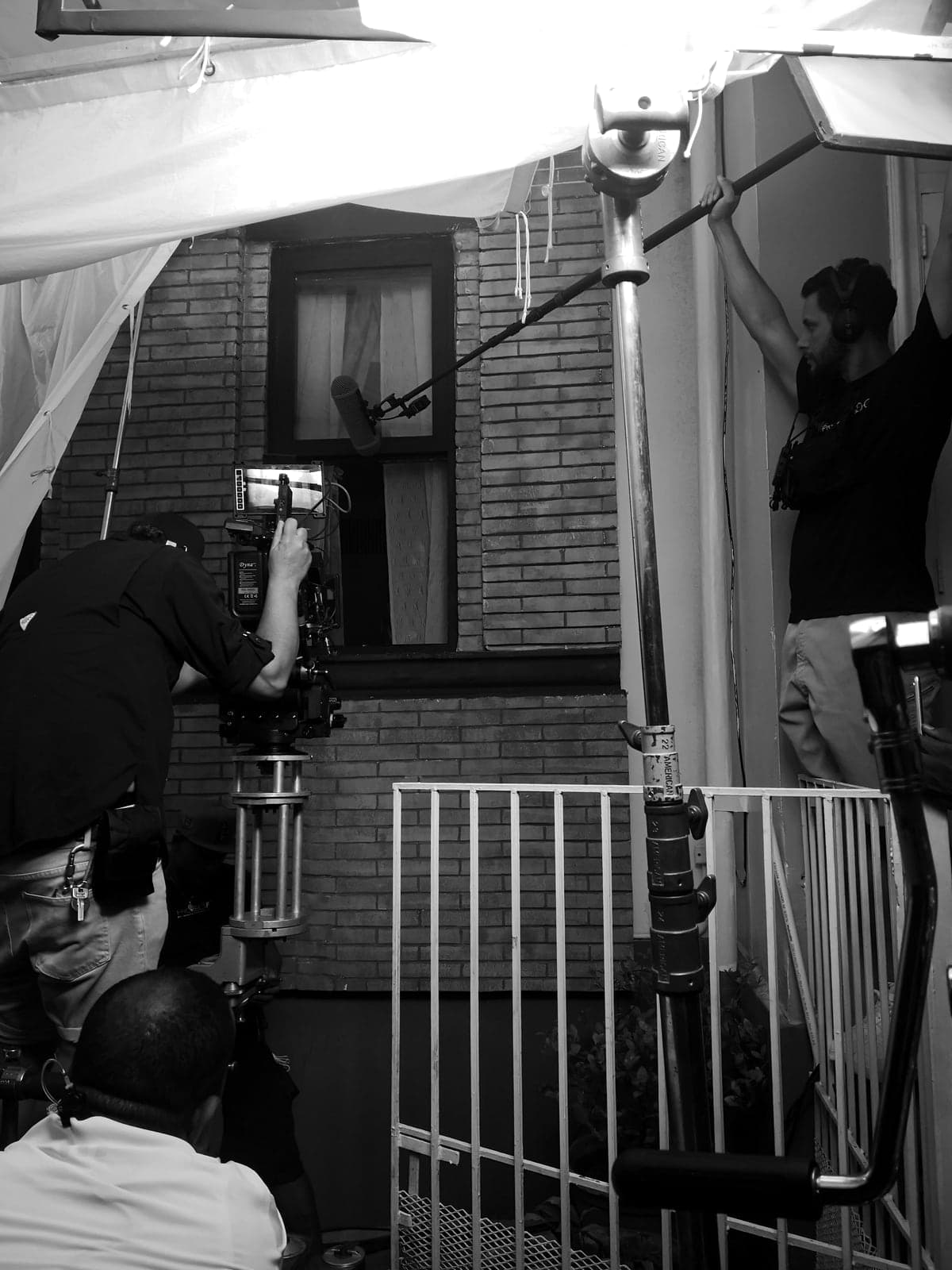
- Above the frame is the most common position; below can work in close shots, with more chest resonance in the voice.
- Follow whoever is speaking and anticipate dialogue changes: rehearsal is your time to learn the lines.
- Watch out for shadows: coordinate the boom position relative to the lights with the cinematographer.
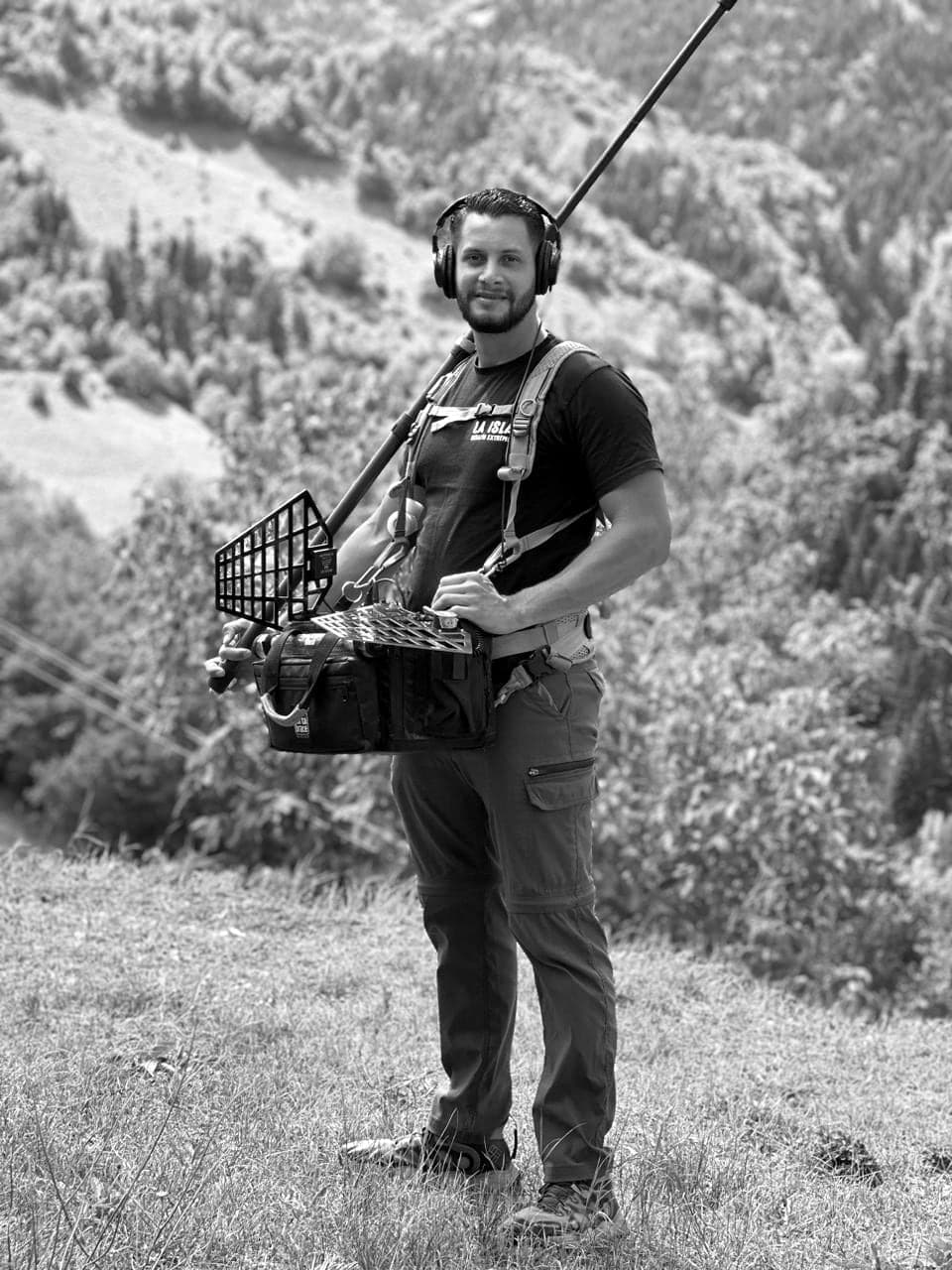
Wind and handling noise
- Foam: only for interiors without drafts.
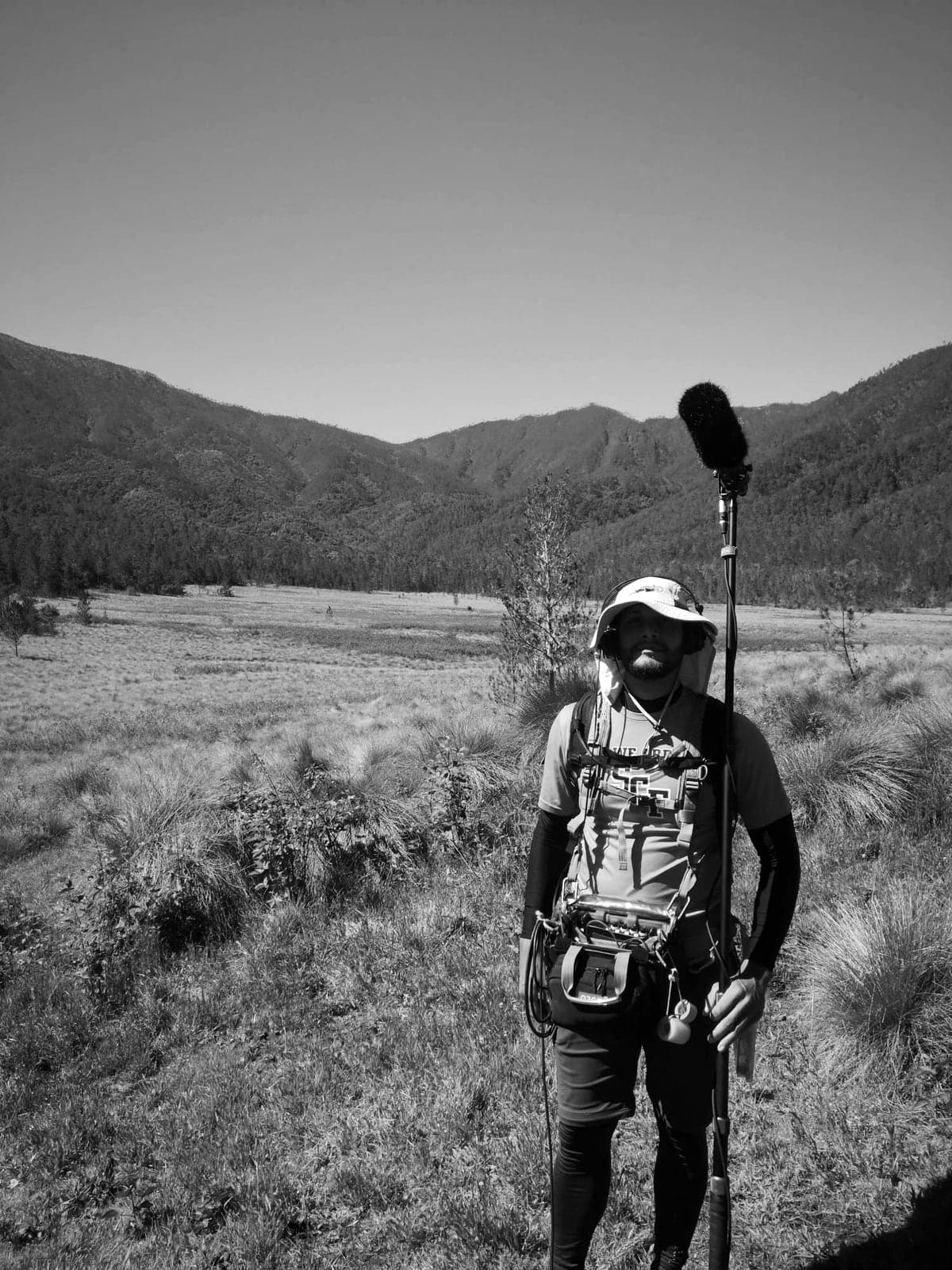
- Basket or “zeppelin”: creates a pocket of still air around the capsule; it's the baseline outdoors.
- Furry cover over the basket: for strong wind. The more protection, the more you need to watch for high-frequency loss.
- Elastic suspension: isolates the microphone from the pole's knocks and vibrations.
- Cable firmly attached to the pole or coiled inside it: a loose cable hits the tube and can be heard.
- High-pass filter (80–100 Hz) to reduce wind and traffic rumble, without taking body away from the voice.
Sources and recommended reading
Technical documentation from manufacturers and regulators. Links open external sites.
- Guide to microphones for use on a boompole · B&H ↗
- The fundamentals of the boom operator · PremiumBeat ↗