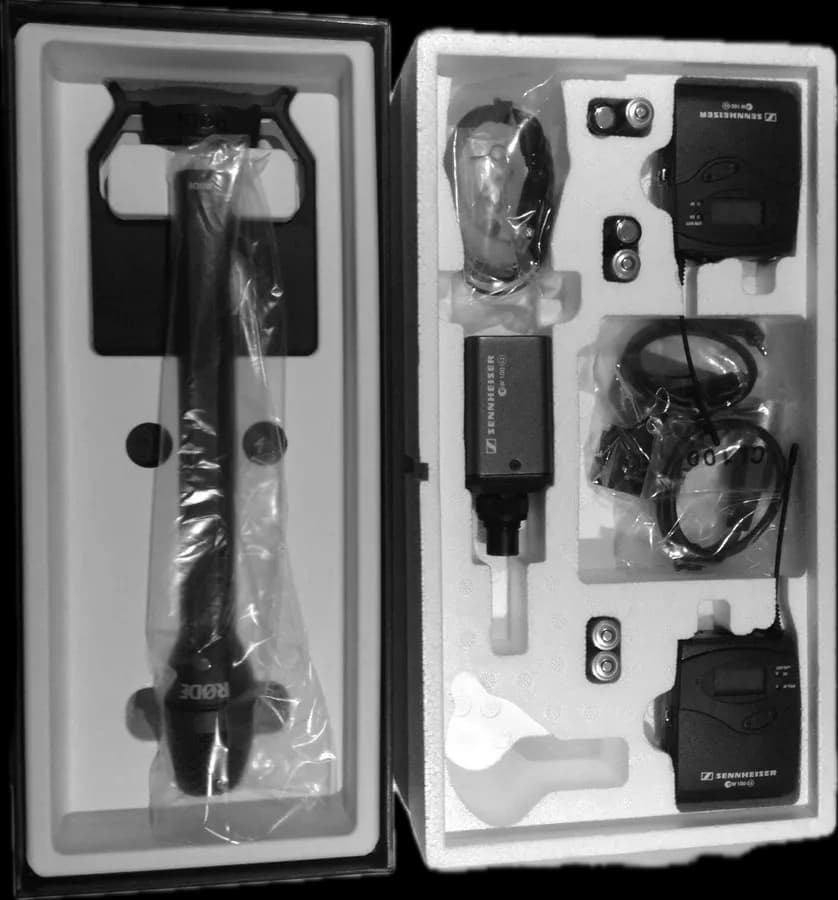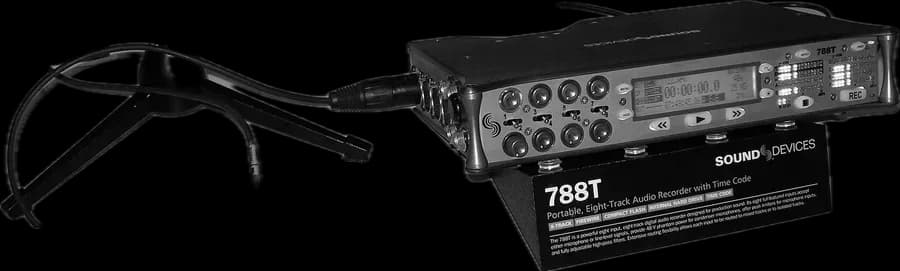
Almost all current equipment has analog parts and digital parts. The useful question isn't which is better in general, but what changes in the sound and in the work on set depending on where the conversion happens.
Wireless systems
An FM radio link has little dynamic range. To fit the whole voice, analog systems compress the audio in the transmitter and expand it in the receiver (companding). On good equipment it's barely noticeable, but it can leave artifacts: a slight “breathing” of the noise floor or tonal changes with very dynamic sounds.
A digital system converts the audio into data before transmitting it. It uses no compander, and the audio that comes out of the receiver is very close to what went in. In exchange, conversion and coding take time: a few milliseconds of latency.
| Analog | Digital | |
|---|---|---|
| Latency | Practically none | A few milliseconds depending on the model |
| Compander | Yes, can leave artifacts | No |
| When the signal weakens | Noise appears gradually: it warns you before dropping out | Stays clean until it cuts out abruptly |
| Encryption | No | Many models offer it, useful at private events |
| Channels in the same spectrum | More spacing between channels | Many systems allow tighter channel spacing |
Recorders
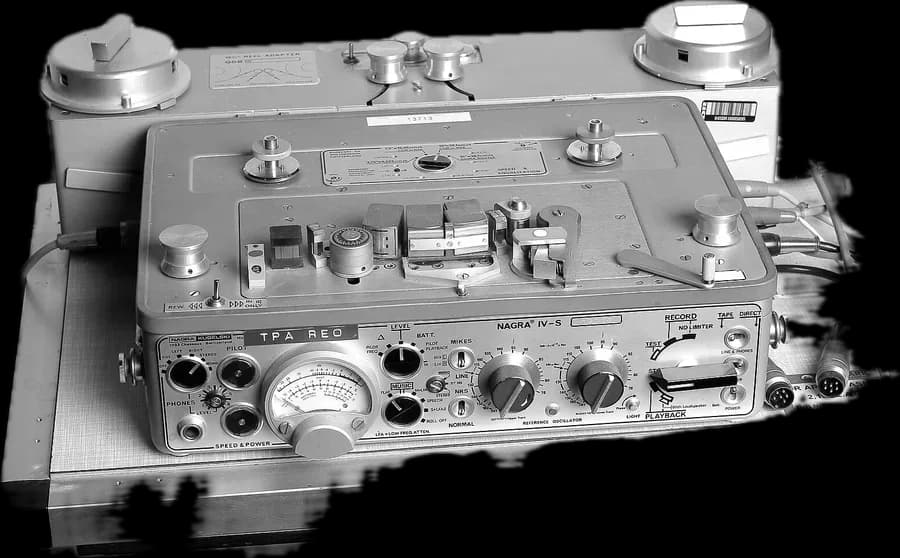
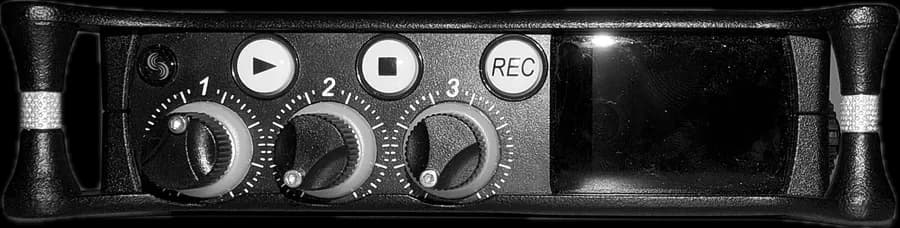
Every current field recorder records digitally; tape (like the classic Nagras) is left for very specific uses. What's still analog is the input: the preamp and, on professional models, the limiters that act before the converter. That's why two digital recorders can sound different: the quality of the preamp and converter makes the difference.
 01
Analog · open-reel tape
Nagra IV-S
Magnetic recording on tape: no digital conversion, with its own character and a lot of mechanical maintenance.
Photo: DR Kulturarvsprojekt · CC BY-SA 2.0 · Wikimedia Commons
 02
Digital · SD card
Sound Devices MixPre-3
Analog input, digital conversion and recording: no moving parts and files ready for editing.
Freely licensed photos with the background removed (adaptations of CC BY-SA photos are shared under the same license). Trademarks belong to their manufacturers; they are mentioned for information only.
Mixers and consoles
In live sound and on sound carts, analog and digital desks coexist. Analog ones respond instantly and are easy to understand at a glance. Digital ones store scenes, integrate EQ, compression and automixing, and connect over a network (Dante, MADI) with many channels on a single cable, with the latency of their processing.
How to choose
- For film and TV, a quality digital wireless system simplifies coordination and delivers cleaner audio; a well-coordinated professional analog system still works very well.
- For musicians on in-ears, total latency matters more than in dialogue: add it up across the whole chain.
- Before mixing equipment from different generations on the same set, test how their latencies add up.
Sources and recommended reading
Technical documentation from manufacturers and regulators. Links open external sites.
- Analogue vs digital wireless · Shure ↗
- Digital wireless latency explained · Shure ↗
- Analogue v digital: companding · Sound Devices ↗