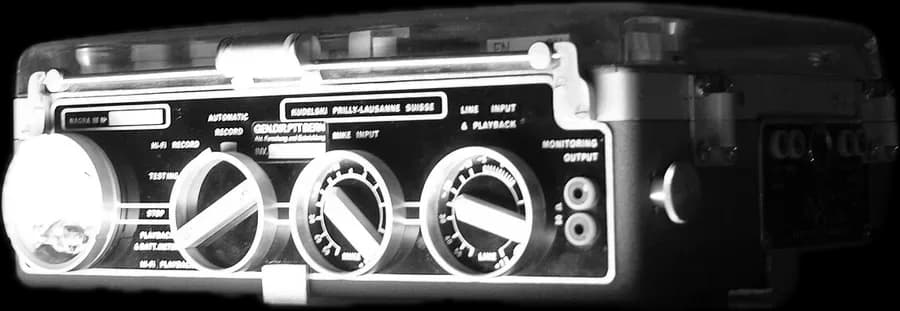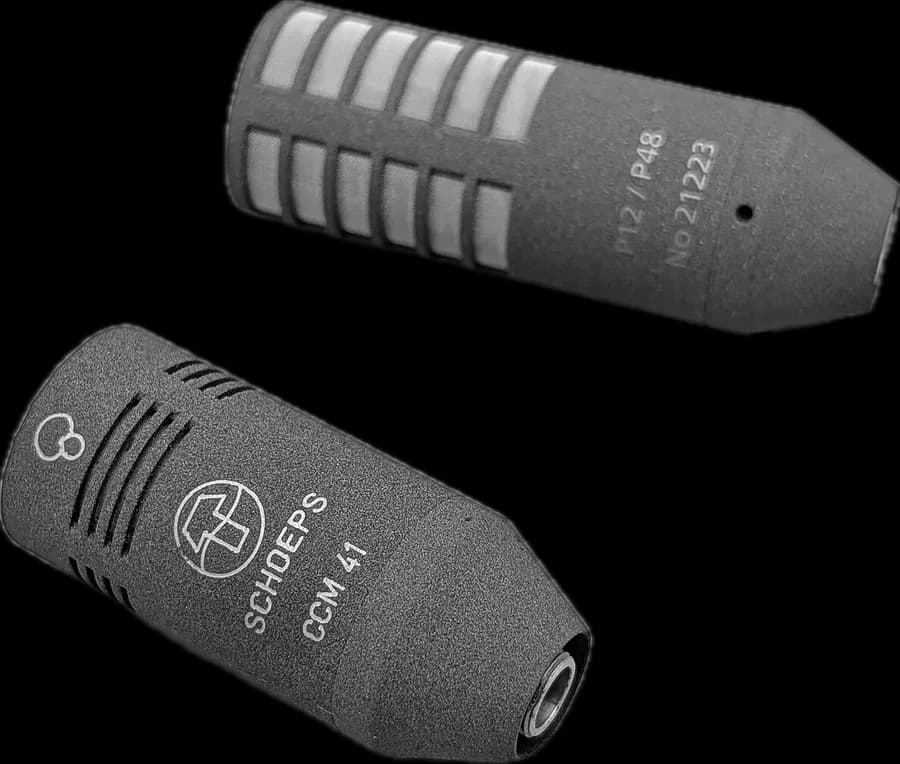
Today almost any recorder records WAV at 48 kHz and 24 bits, the standard for audio for video. The difference between a basic recorder and a film one isn't the format but everything that happens before and after: the quality of the input, how it protects the signal, how it syncs with the camera and how it delivers files to editorial.
What's inside a recorder
Professional vs. basic
| Aspect | Basic recorder | Professional recorder |
|---|---|---|
| Inputs | 2 to 4, sometimes minijack | 4 to 16 or more, XLR with phantom on each |
| Preamps | More noise at high gain | Very low noise; quiet voices and clean ambiences |
| Protection | Digital limiter or none | Analog limiters before the converter and/or 32-bit float |
| Tracks | One stereo mix | Isolated tracks per microphone plus the mix |
| Timecode | None, or it drifts | Accurate internal generator, jam sync with cameras |
| Metadata | File name | Scene, take, track names and notes (BWF/iXML) |
| Safety | One card | Simultaneous recording to two cards |
| Power | AA batteries | External batteries and redundant input |
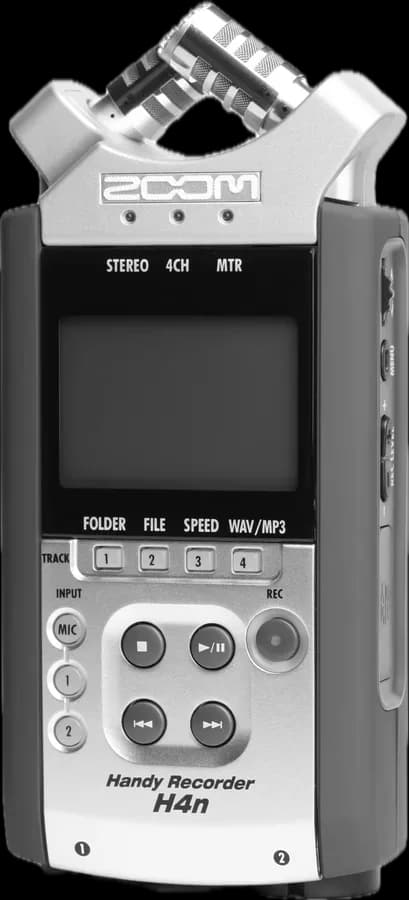
Basic handheld
Zoom H4n
Built-in microphones and two XLR inputs. Ideal for ambiences, podcasts or backup; no professional timecode.
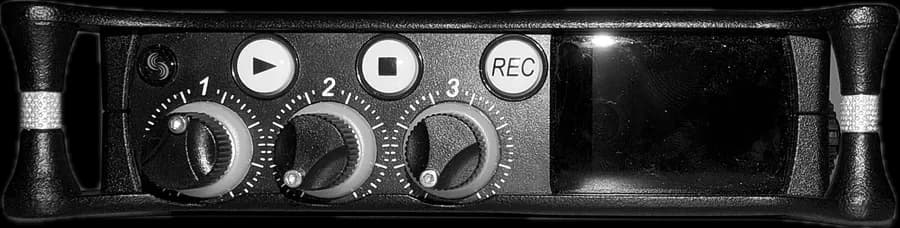
Compact professional
Sound Devices MixPre-3
Three low-noise preamps in a very small body. The II series added 32-bit float recording.
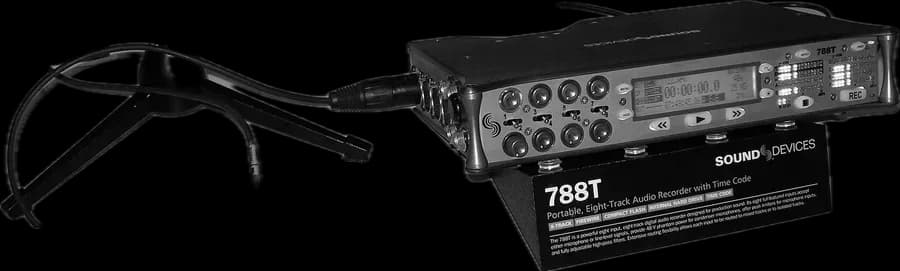
Film multitrack · 8 tracks
Sound Devices 788T
An 8-track recorder with timecode and metadata, the standard on sound carts for years.
Freely licensed photos with the background removed (adaptations of CC BY-SA photos are shared under the same license). Trademarks belong to their manufacturers; they are mentioned for information only.
32-bit float: what it solves and what it doesn't
A 24-bit file has a ceiling: anything above 0 dBFS is clipped and can't be recovered. 32-bit float recorders use two or more converters at once (one for normal levels and another for high levels) and store the audio in a format with enormous headroom above 0 dBFS. An unexpected scream can be brought down in editing without distortion.
Timecode and metadata
Timecode is a clock (hours:minutes:seconds:frames) the recorder writes into every file. If camera and sound share the same timecode, editorial syncs hundreds of takes automatically instead of finding the slate clap one by one. A professional recorder keeps that clock stable for hours; a basic one can drift several frames.
Metadata (BWF format with iXML data) stores the scene, take, the name of each track (“Ana lav”, “Boom”) and the sound mixer's notes inside the file. For editorial it's the difference between understanding the material when they open it or having to listen to every track.
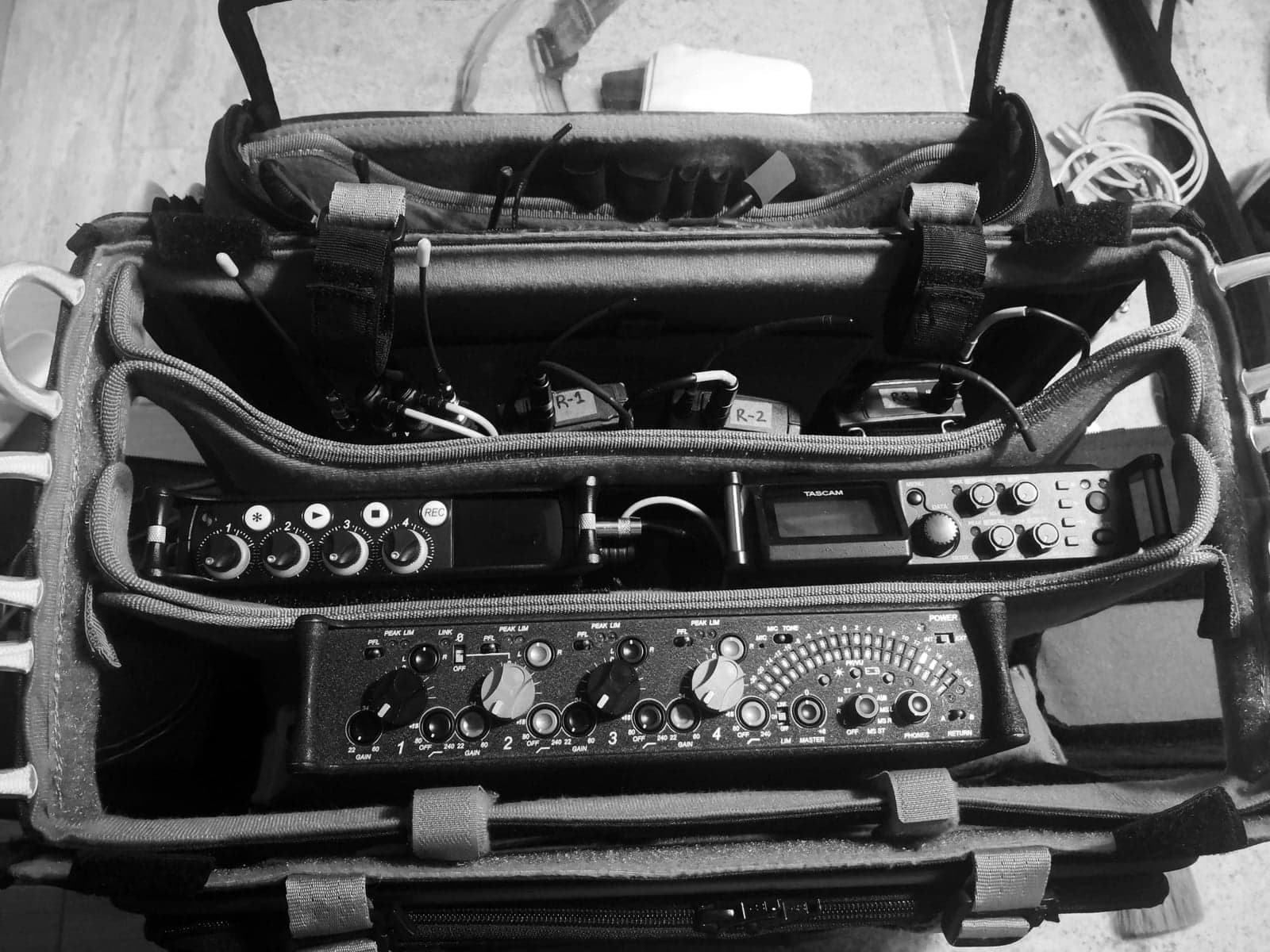
When a basic recorder is enough
- Recording ambiences or effects with its own stereo microphone.
- As a backup recorder on an actor's body or inside a vehicle.
- Podcasts, simple interviews and projects with one or two microphones and no camera sync.
For fiction, commercials or reality shows with several microphones, multiple cameras and delivery to post-production, a professional recorder's features save hours of editing and avoid losing takes that can't be repeated.
Sources and recommended reading
Technical documentation from manufacturers and regulators. Links open external sites.
- How is a 32-bit float file recorded? · Sound Devices ↗
- MixPre II series: 32-bit float recording · Newsshooter ↗