The sound recordist's job hasn't changed that much: capture clean dialogue and deliver it in sync with the picture. What has changed is the tool. Each generation of recorders solved a problem of the previous one and brought a new way of working.
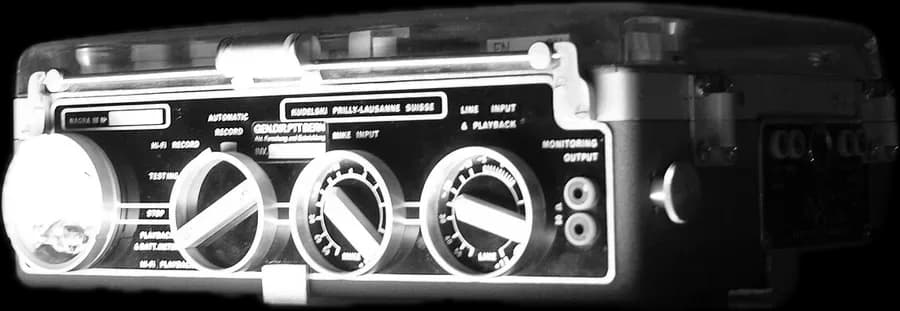 01
Analog tape · late 1950s
Nagra III
A portable Swiss recorder that became the film standard: light, reliable and synced with pilot tone.
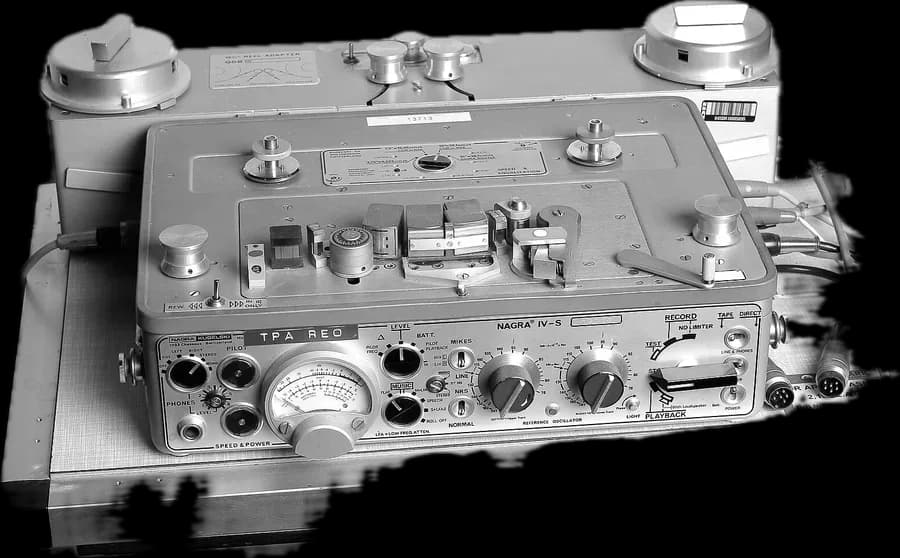 02
Stereo analog tape · 1970s
Nagra IV-S
Stereo and, in its timecode versions, ready for modern sync. Its sound is still appreciated today.
Photo: DR Kulturarvsprojekt · CC BY-SA 2.0 · Wikimedia Commons
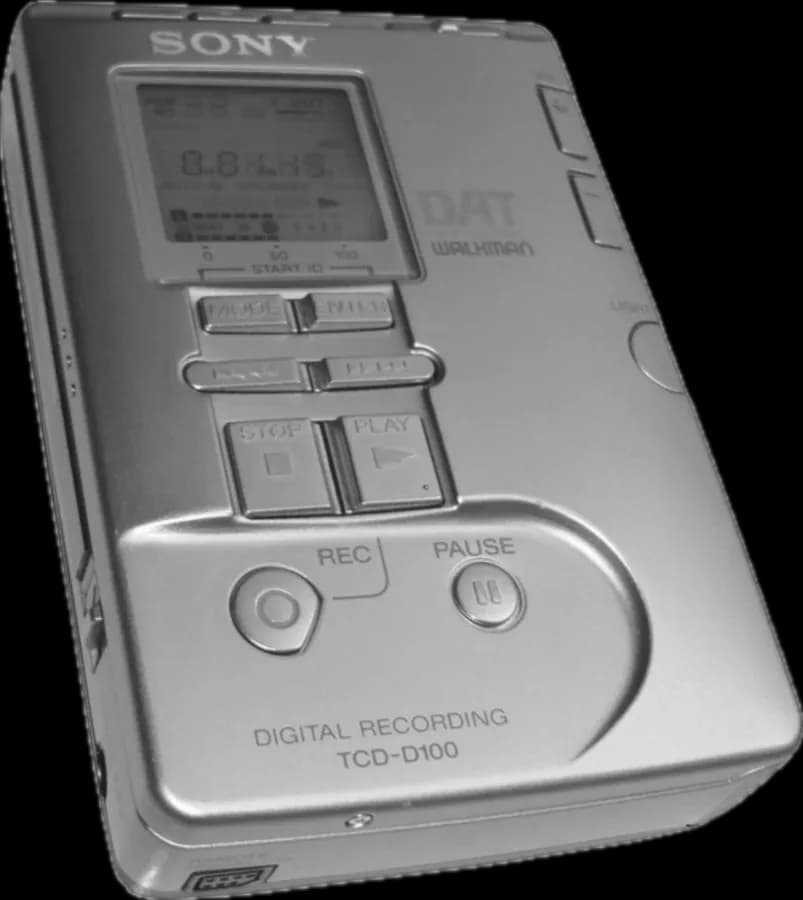 03
Digital tape · late 1980s and 1990s
DAT recorder
Audio goes digital on tape. Professional models with timecode replaced open-reel tape on many sets.
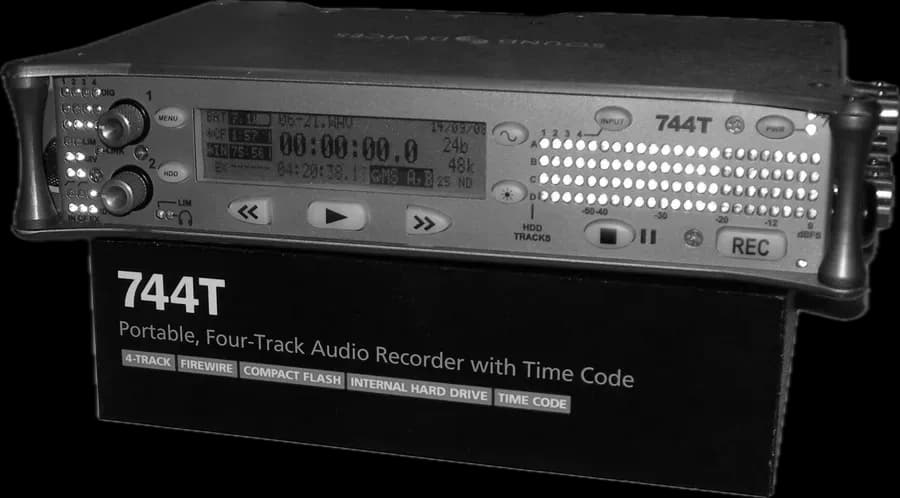 04
Hard disk and card · 2000s
Sound Devices 744T
No tape: multitrack WAV files with timecode and metadata, ready to copy to editorial.
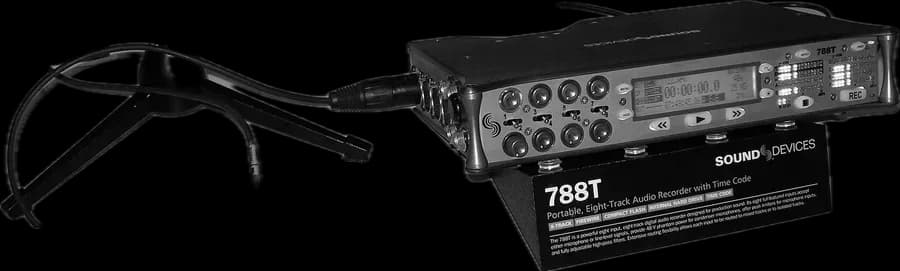 05
Eight tracks · late 2000s
Sound Devices 788T
More isolated tracks for more wireless microphones: the modern sound cart is built around it.
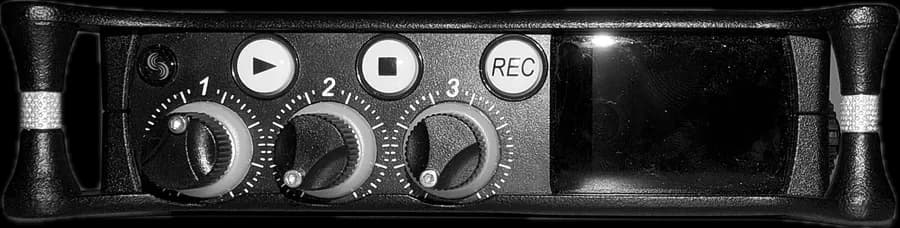 06
Compact · 2010s
Sound Devices MixPre-3
Professional quality in a minimal body; the II series added 32-bit float.
Freely licensed photos with the background removed (adaptations of CC BY-SA photos are shared under the same license). Trademarks belong to their manufacturers; they are mentioned for information only.
The tape era
For decades film sound was recorded on open-reel magnetic tape. The challenge wasn't just recording well, but keeping the sound from drifting out of sync with the picture. The solution was to record a sync signal (pilot tone) alongside the audio, which made it possible in the studio to match the tape speed to the film's. The slate marked the exact point to line up sound and picture by hand.
- Advantages: ruggedness, battery life and a sound with its own character.
- Limitations: one or two tracks, expensive and heavy tape, slow transfers and constant mechanical maintenance.
Digital arrives: DAT
Digital audio tape (DAT) brought location sound into the digital world: no tape hiss and copies identical to the original. Professional machines added timecode, which began to automate sync in editing. It was still tape with delicate mechanics: humidity, dust or a dirty head could cause read errors.
From media to files
The big change came when recorders started writing files to hard disks and memory cards. Critical moving parts disappeared, material could be copied to editorial in minutes and every microphone could have its own track. With metadata (scene, take and the name of each track) inside the file, the sound recordist started delivering material that was already organized.
| Generation | Media | Tracks | Sync | Delivery to editorial |
|---|---|---|---|---|
| Analog tape | Open reel | 1–2 | Pilot tone + slate | Real-time transfer |
| DAT | Digital tape | 2 | Timecode on pro models | Real-time digital copy |
| Disk and card | WAV files | 4 to 16+ | Timecode + metadata | File copy in minutes |
| 32-bit float | WAV files | Varies | Timecode, often wireless | Files with headroom to fix levels |
Today: 32-bit float and remote control
Current recorders add multiple converters and 32-bit float to protect against clipping, control from phone apps, wireless timecode and, in some cases, networked audio. The recorder has gotten smaller, but the sound recordist's responsibility is still the same: correct gain, the microphone in the right place and an orderly delivery.
Sources and recommended reading
Technical documentation from manufacturers and regulators. Links open external sites.
- Nagra (history of the brand) · Wikipedia ↗
- Digital Audio Tape · Wikipedia ↗
- How is a 32-bit float file recorded? · Sound Devices ↗